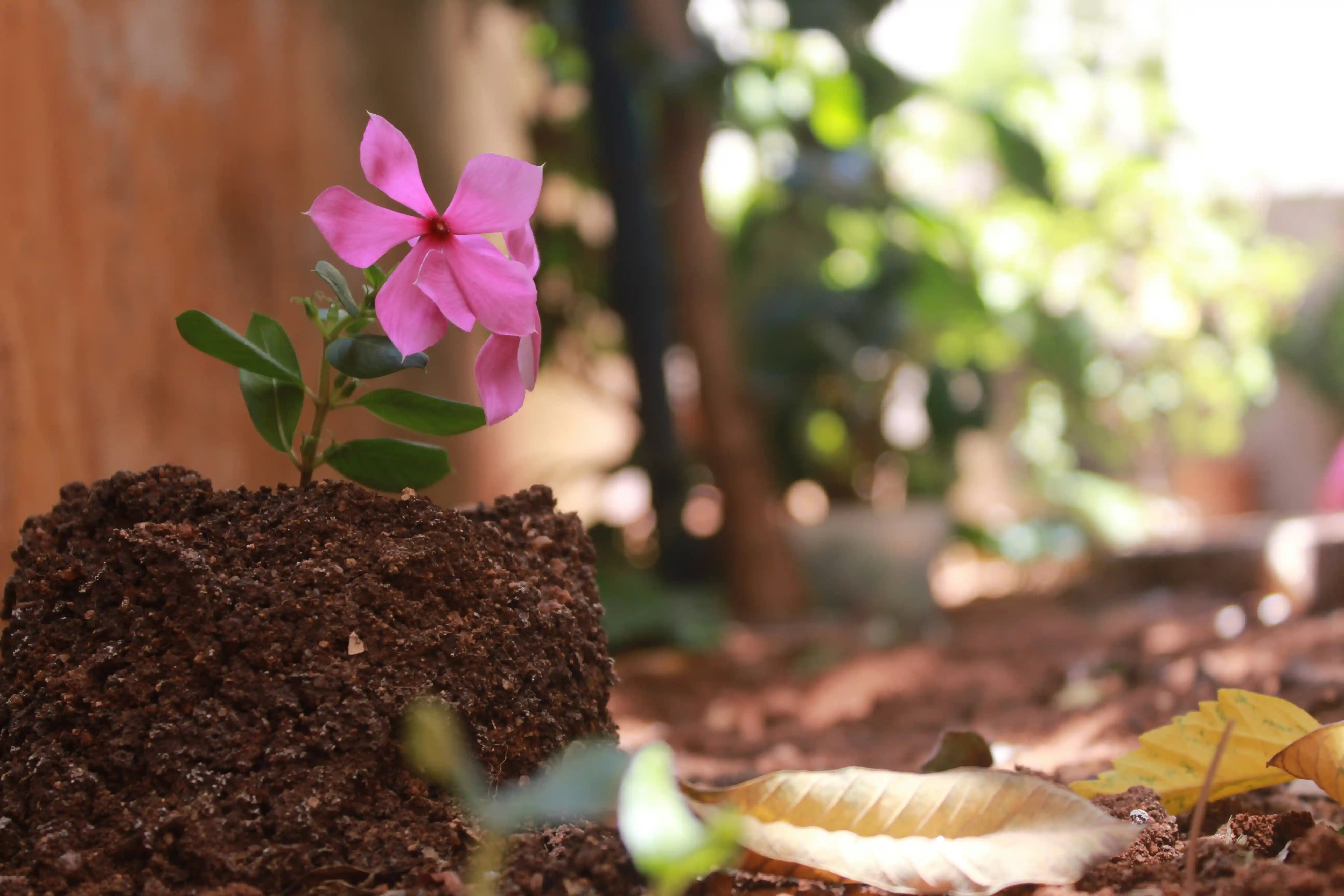
When my bird passed, I didn't look anything up. The next day I went straight to the garden shed, found a shovel, and started digging.
I used a little cardboard box — the kind you can grab at the dollar store — and tucked his favorite treat in beside him. I used the shovel itself as my depth guide, so I know I went down close to twelve inches. I planted a flower over the spot afterward, and a few days later I set up a small solar-powered motion alarm nearby, just to keep other animals from getting curious. It felt like the right thing to do. It felt final in a way that mattered — this is it, this is goodbye, rest in love, my little friend.
What I didn't know, standing there with a shovel in my hand, was whether any of that was actually allowed. I didn't know what cremation involved, what it cost, or how quickly it could even be arranged. I didn't know backyard burial had rules attached to it at all. I just moved, the way you do when your body needs something to do while your mind is busy coping with grief.
So this is the article I wish I'd had that day. It's not a set of instructions for what you should do — just what I found out, laid out plainly, so you're not standing where I was standing a year ago.
A quick note before we start: none of this is legal advice, and rules genuinely vary by city and province or state. Where I can point to something specific, I will — but always double-check with your own municipality.
The clock is already running
Here's the part that doesn't get talked about in advance: you don't have unlimited time to decide.
Without any cooling, your pet's body starts to change within a matter of hours — most guidance points to somewhere in the 4-to-12-hour range before decomposition becomes noticeable, faster if the room is warm. With ice or a cool room, you can usually stretch that to a couple of days. If frozen, you can extend that further — weeks, sometimes months.
That's not meant to rush you. It's meant to tell you that if you're not ready to decide today, freezing your pet's body is a completely normal thing to do — vets mention it often, and it simply buys you room to breathe. You don't have to figure out burial or cremation in the first hour. You just need to keep your pet cool while you catch up to what's happening.
If you choose cremation
I didn't know how any of this actually worked, so here's the plain version.
Who does it. Most vet clinics don't cremate on-site — they partner with a separate crematory and arrange pickup after your pet passes. You can also go directly to a crematory yourself, which is sometimes a little cheaper, though going through your vet is often simpler at a moment when "simple" is exactly what you need.
Private vs. communal vs. partitioned. These words get used loosely, so it's worth knowing what they actually mean:
- Communal — your pet is cremated with other animals, and ashes aren't returned to you. It's the least expensive option.
- Private — your pet is cremated alone, and you receive their ashes back.
- Partitioned — a middle option some providers offer, where multiple pets are cremated together but kept separated so each family still gets their own pet's ashes back.
Not every provider uses these words the same way, so it's always worth asking directly what you'll actually get back.
What it costs. Prices vary a lot by size, location, and provider, but as a rough starting point (figures below in USD):
| Communal | Private | |
|---|---|---|
| Small bird | ~$30–$100 | ~$100–$250 |
| Cat / small dog | ~$50–$150 | ~$100–$300 |
| Medium dog | ~$100–$200 | ~$175–$350 |
| Large dog | ~$150–$250 | ~$250–$500+ |
In Canada, I've seen private cremation running roughly $300–$350 CAD for small-to-medium animals, climbing higher for large animals based on weight, while communal cremation tends to run $75–$180 CAD. One thing to note: some quoted prices cover the cremation itself, not a proper urn — that's often a separate cost on top, though some providers do include a basic urn in their pricing.
Some places to start, if you're in Toronto/GTA. I'm not endorsing any one of these over another — just naming a few real, established options so you're not starting from zero if you need to make a call today:
- In Good Hands Pet Loss — a holistic Toronto pet funeral home offering private, partitioned, and communal cremation.
- Toronto Humane Society — offers compassionate end-of-life services, including cremation arrangements, through their Toronto location.
- Faithful Pet Memorial — a Toronto-based provider offering aquamation (a water-based alternative to flame cremation) alongside traditional options.
How long it takes. It's not a same-day thing. Between transport, paperwork, and the provider's queue, most families wait somewhere around one to two weeks to get ashes back. If you want any keepsake — a paw print, a bit of fur — it usually needs to be requested before the cremation happens, not after.
If you choose burial
This is the path I actually took, without knowing what I was doing.
The general pattern. Across the sources I read, the same rough numbers kept showing up: bury at least 2 to 4 feet deep, well away from any water source, wrapped in something biodegradable rather than plastic. In Ontario specifically, the commonly cited guideline is at least 1.2 meters — right around 4 feet.
In Toronto and the rest of Ontario, I haven't found any bylaw written specifically for pet burial. The law that gets pointed to instead is the Dead Animal Disposal Act — and if you read it closely, it was actually written for farm animals (horses, cattle, sheep, goats, swine), not pets. Its rule is straightforward: bury within 48 hours, under at least two feet of earth. It's not technically about dogs, cats, or birds at all — but in practice, it's the number Toronto pet owners and even local funeral homes point to, because there's genuinely nothing more specific written for companion animals. I found that kind of comforting, honestly — it explains why every answer I found online points to a similar guideline. That's because it is. Two feet is the number people have landed on anyway, and going a bit deeper, I think, only helps.
What about winter? This is the part I think about most, because my bird happened to pass away in summer. If yours doesn't, frozen ground can make digging next to impossible. The honest answer here is: you don't have to force it. If you're able to keep your pet frozen until the ground softens, that's a normal, gentle option — your vet may be able to help store the body in the meantime. And if waiting doesn't feel right, that's a completely reasonable moment to lean toward cremation instead. Neither choice is the "correct" one. It's just about what the season actually allows.
Photo by Honey Yanibel Minaya Cruz on Unsplash
Keepsakes, just in case. One thing I luckily had been doing over the past few years of having my pet bird is keeping a few of his feathers, for myself. If you're leaning toward burial but worried about someday moving away from that spot, you don't have to choose between a resting place and something to carry with you. A few feathers, a bit of fur, a small stone from the site, a collar tag — something small, tucked away now, means that even if the ground stays behind one day, you won't be leaving without anything to hold onto. I've kept mine in a little container ever since, with the idea that I might someday have them turned into a small resin keepsake. I haven't done it yet. But I like knowing it's there, waiting for me whenever I'm ready.
No yard? Renting? Living in an apartment?
If backyard burial isn't an option for you, you're not out of options — you just land somewhere different.
Burial generally assumes it's happening on land you actually own, or land where you have clear permission. Renting makes that murkier, even if you've lived somewhere for years, since the land was never really yours to commit to permanently. In that situation, most people end up choosing cremation, or a spot at a dedicated pet cemetery instead — which brings us to the next section.
Pet cemeteries
I hadn't really thought about this option until I started researching, and it's worth knowing about.
A pet cemetery sits somewhere between backyard burial and cremation — a dedicated space, sometimes offering individual plots, sometimes offering a shared communal area with a memorial marker. Some providers even combine the two: a communal cremation followed by the ashes being laid to rest at a cemetery site, with a shared marker you can visit. It's a nice middle ground if you want a physical place to go back to, but burying in your own yard isn't possible or doesn't feel right.
Cremation or burial — what each one actually gives you
I don't think there's a right answer here. But laid out plainly, each path tends to offer something different.
Burial tends to be simpler and less expensive, especially for a smaller pet. It's immediate — there's a place, right there, that you can visit and tend to. It opens the door to ongoing little rituals: caring for a garden, adding a small stone or marker, watching something grow above where they rest. The tradeoff is that the place stays fixed. If you move one day, the connection to that spot doesn't move with you — though as I mentioned above, a small keepsake taken at the time can soften that. If you're looking for other ways to keep a pet's memory close at home, I've written more about that here.
Cremation gives you room to breathe before you have to do anything at all — you're not rushed into a ceremony while you're still in shock. The ashes travel with you, wherever you end up living next. And it opens up options a grave simply can't: scattering somewhere that mattered to your pet, splitting the ashes between family members, planting a tree and letting that become the memorial instead of a plot in the ground. The tradeoff, mostly, is cost — and for some people, it can feel a little less immediate than having a physical place to visit right away.
Neither one is more loving than the other. They just ask different things of you, and give different things back.
What actually helped me decide (or didn't)
If I'm honest about it, I don't think I really decided anything the day my bird died. I moved. I dug. I planted. It felt less like choosing and more like my body finding something to do while the rest of me caught up.
Looking back, I think that's just how grief showed up for me that day — not as stillness, but as motion. Digging a hole gave me somewhere to put all of it. I didn't sit down and weigh cremation against burial. I didn't think about cost, or about whether I'd still live in that house years later. I just needed to do something, and burial was that something that was right there in front of me.
Sometimes I think about whether I'd do it differently if I could go back. I think I might choose cremation, if I could afford it and had the bandwidth to arrange it with a local crematory or vet service. As an introvert with some anxiety, moving around the city while under that kind of emotional distress can feel like a daunting mission to take on — and I think that quiet reality shapes more people's decisions than we tend to admit.
However you find yourself moving through this — quickly and instinctively, like I did, or slowly and carefully, weighing every option — burial or cremation, either path gives your pet a goodbye shaped by how much you loved them. Mine was a flower over a small patch of earth. Yours might look completely different. However it looks, it will be done with love.
If you're looking for more ways to hold onto their memory afterward, I've written about how to memorialize your pet at home.
If you're looking for more support while you navigate this, I've gathered some resources here that might help.
And if you'd like a lasting place to hold their memory, PetTribute offers a free space to create a tribute — something to return to, whenever you want to remember. Create a tribute →
Create a free permanent tribute for your pet —
somewhere their name lives.
If grief is feeling heavier than you can carry alone right now, our finding support page has gentle resources that might help.